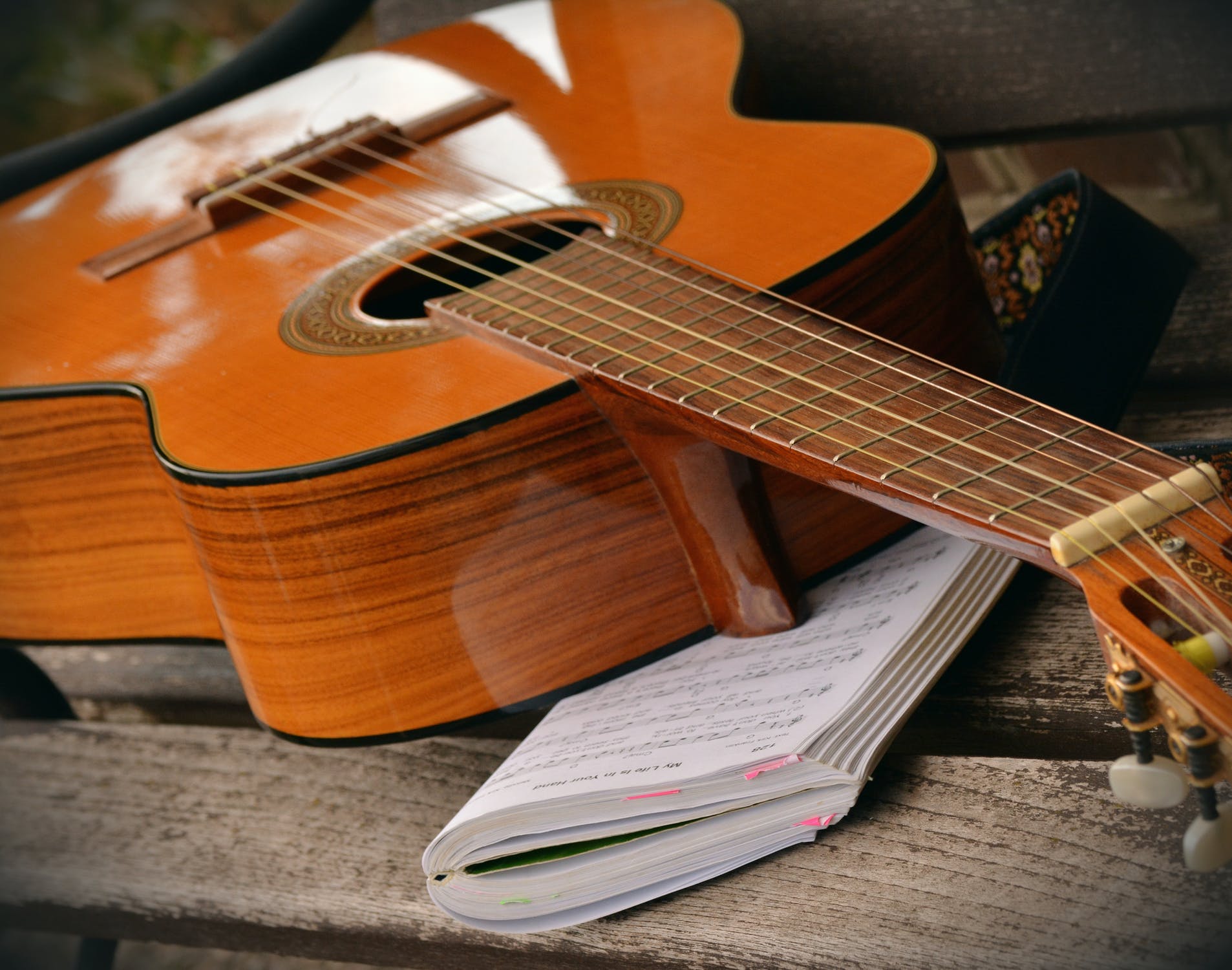
Performing Guitar is an important part of every guitar student’s musical journey. At some point, you will need to play in front of others. This might happen at a school event, a recital, a concert. Also it can be: a community performance, or simply at home for parents, friends, or colleagues.
Whether the performance is formal or informal, the approach should be the same. A performance is your moment to present the piece you have prepared. No matter who is listening or how many people are in the audience.
Many students feel more nervous in a formal setting. This is completely normal. Still, the preparation process does not change. Good preparation creates confidence, and confidence reduces nerves.
Performing Guitar and Bringing a Piece to Life
Bringing a piece of music to life is a long, steady process. You start by choosing a piece you enjoy. Then you make sure it fits your technical level. After that, you learn the notes, understand the phrasing, and practice the tricky parts.
Eventually, you polish the piece and aim to play it by heart. Memorizing helps you feel secure and allows you to focus more on expression.
But even this is not the final step the piece becomes complete only when you perform it. Every performance teaches you something new about the music. You begin to understand transitions better. Start noticing places where you tense up. You learn how the piece reacts when you are under pressure.
This is why professional guitarists often keep the same pieces in their repertoire for years. They perform them again and again. Each performance improves the piece and makes it feel more natural.
For you, this means you should not feel pressured to learn a new piece for every concert. It is better to perform a piece multiple times and improve its quality.
Building Your Performing Guitar Repertoire
Even if you are a beginner, it is helpful to start building a small repertoire early. Choose two or three pieces that you enjoy playing. These should be pieces you can perform with confidence and consistency. The difficulty level is not important; what matters instead is control and musicality.
As you continue learning, your repertoire will naturally grow. Later on, You might add new pieces and remove older ones. Eventually, the number of pieces you can maintain will depend on how much practice time you have. Therefore, a repertoire needs regular attention in order to stay polished and performance-ready.regular attention. If you stop playing a piece for too long, it becomes weak.
Balancing your practice is important. You need time to maintain your repertoire and time to learn new pieces. You also need time to work on technique. With this balance, your repertoire will evolve naturally as your playing improves.
Performing Guitar to Reduce Anxiety
Performance anxiety is something almost every musician experiences. The best way to reduce it is preparation. When you have a well-practiced repertoire, you always feel more ready.
Knowing you have performance-ready pieces gives you confidence. You do not feel rushed or stressed when a performance opportunity appears.
“Playing music has a magical way of creating peace within the mind.” — Debra Shipman,
A Prescription for Music Lessons, Federal Practitioner, PMCID: PMC6368928, PMID: 30766157.
Feel free to copy and paste this directly into your blog post!
Each performance also makes the next one easier. In addition to that, You learn how your body reacts, you learn how to calm yourself. You learn how to breathe, focus, and recover quickly from mistakes.
Over time, you begin to enjoy performing rather than fear it.
Building a repertoire and performing regularly are both powerful training tools. They help you become a stronger musician and make your journey as a guitar student more enjoyable. Whether you perform on a stage or in a living room, Performing Guitar is a key part of your growth.
Formal or Informal—Your Approach Should Stay the Same
As a guitar student, there will come a time when you need to perform in front of an audience. This could be at a school assembly, a class production, a concert, a recital, or even at home in front of parents, friends, relatives, or colleagues (if you are an adult), etc. In general, it shouldn’t matter whether the performance is formal or informal—the concert or performance should be approached in the same way. This is the moment when the piece is presented to listeners, regardless of who they are or how many people are in the audience.
Usually, people tend to feel more nervous, or let’s say more self-conscious, if the performance is formal compared to an informal setting (like at home or for just one friend).
Leave a Reply